
- Home/
- Buy Propecia at Low Price in the United Kingdom Online
Can Propecia be obtained without a prescription in the United Kingdom?
No, Propecia (finasteride) requires a valid prescription in the United Kingdom. It is illegal and unsafe to obtain it without a prescription from a licensed healthcare professional.
Summary: Key Facts about Propecia in the United Kingdom
- Active ingredient: Finasteride 1 mg (for male pattern hair loss)
- Prescription status: Prescription-only medicine (POM) in the United Kingdom
- Main clinical use: Treatment of male pattern hair loss (androgenetic alopecia) in adult men
- Legal status (2026): Regulated by the Medicines and Healthcare products Regulatory Agency (MHRA)
- Time to effect: Usually requires 3–6 months of daily use for visible results
- Major contraindications: Not for use in women or children; contraindicated in pregnancy (even handling crushed tablets is unsafe for pregnant women)
- Price in UK (2026): Approx. £25–£60 per month for branded Propecia; generics available for £10–£30/month (region dependent)
- Insurance/NHS coverage: Not routinely covered by the NHS for hair loss; usually private prescription only
How Does Propecia Work? (Finasteride Pharmacology Explained)
Propecia contains finasteride, a type II 5-alpha reductase inhibitor. This enzyme is responsible for converting testosterone to dihydrotestosterone (DHT), a more potent androgen hormone. Elevated levels of DHT are believed to miniaturise hair follicles in genetically susceptible men, leading to thinning and eventually hair loss—particularly on the scalp vertex and frontal areas.
By inhibiting the type II 5-alpha reductase enzyme, finasteride reduces scalp and serum DHT concentrations by approximately 60–70% when taken as prescribed. This reduction helps slow hair follicle miniaturisation, promote hair regrowth in some men, and stabilise further hair loss.
To visualise: imagine DHT as an aggressive gardener who keeps trimming your hair roots. Propecia tells that gardener to put down the shears, giving your hair a fighting chance—but only for as long as you take the medication. Once you stop, DHT levels rise again, and the gardener resumes his relentless pruning.
Important to note: Propecia does not cure hair loss but manages the underlying hormonal cause as long as it is taken continuously. It does not work instantly—commitment over several months is required, and not every man will see dramatic regrowth.
Pharmacokinetics: Finasteride is absorbed orally, reaches peak plasma concentration within 1–2 hours, is metabolised in the liver (primarily via the CYP3A4 pathway), and is excreted through urine and faeces. Its elimination half-life is about 5–6 hours in younger men and up to 8 hours in older men.
References: (MHRA/EMC), (NHS), (PubMed 2024 clinical update)
Expert Commentary from doctor
In my practice, one of the main challenges with Propecia is unrealistic patient expectations. I often see men expecting rapid or dramatic regrowth, when in reality the medication’s primary benefit is to slow further loss—regrowth, if it occurs, is often modest and gradual. Another pitfall is discontinuation: many stop after 3 months due to perceived lack of results, not realising it can take 6 months or more for noticeable change. I always stress the importance of patience and adherence. Finally, it’s crucial to remind patients that stopping Propecia will most likely result in loss of any gained hair within 9–12 months. Consistency and realistic goals are key for satisfaction.
How Should Propecia Be Taken? (Dosing, Timing, and Duration in UK Practice)
| Parameter | Details |
|---|---|
| Standard dose | 1 mg finasteride tablet, taken once daily at the same time each day |
| Maximum recommended dose | 1 mg/day (for hair loss). Higher doses (5 mg) are used for prostate enlargement, not for baldness. |
| Tablet splitting | Not recommended. Tablets are film-coated to prevent exposure. If splitting is necessary, consult your pharmacist for safety guidance. |
| Missed dose | Take as soon as remembered on the same day. Do not double up the next day. |
| Onset of action | Visible effects usually after 3–6 months of continuous daily use. |
| Duration of effect | Continues with uninterrupted use. Effects reverse upon discontinuation. |
| Adjustments for elderly | Not routinely needed for age alone, but caution if coexisting liver impairment. |
| Special populations | Not indicated for women or children. Contraindicated in pregnancy and breastfeeding. |
For best results, take Propecia at the same time each day with or without food. Consistency is crucial. There’s no evidence that taking more than the recommended dose speeds up benefits—higher doses only increase risk and are not more effective for hair loss.
Bottom line: Take 1 mg daily, be patient, and don’t stop abruptly without discussing with your doctor.
Can I Take Propecia with Food, Alcohol, or Other Substances?
- With food:
- Propecia can be taken with or without food. Food slightly delays absorption but does not reduce effectiveness or require diet changes. There is no significant interaction with fatty meals.
- Alcohol:
- Moderate alcohol consumption does not interact with finasteride. However, excessive drinking can stress the liver, which also metabolises finasteride, so moderation is advised. There’s no ban, but heavy regular use is discouraged.
- Grapefruit juice:
- No clinically significant interaction reported between grapefruit juice and finasteride.
- Caffeine:
- No known interaction.
Practical tip: If you have liver concerns (from alcohol use or otherwise), discuss this with your doctor before starting Propecia.
Who Should Not Take Propecia? (Absolute and Relative Red Flags)
| Absolute Contraindications | Explanation |
|---|---|
| Women who are pregnant or may become pregnant | Finasteride may cause abnormalities in a male foetus. Even handling crushed or broken tablets can be dangerous. |
| Children and adolescents | Not approved for use; safety and efficacy not established. |
| Allergy to finasteride or any tablet excipient | Risk of severe allergic reaction. |
| Liver insufficiency (severe) | Finasteride is metabolised in the liver; accumulation and toxicity risk in severe impairment. |
Relative contraindications (Caution required):
- Mild-to-moderate liver impairment
- Prostate cancer (finasteride may mask PSA levels)
- Men planning to father children soon (see fertility section below)
- History of depression or sexual dysfunction—discuss risks versus benefits
After heart attack or recent surgery: No direct contraindication, but discuss with your doctor before starting; monitor for stress on the body.
What Side Effects Are Most Common with Propecia?
Very Common (>1 in 10):
- None consistently reported at this frequency in clinical trials
Common (1 in 100 to 1 in 10):
- Reduced libido (sex drive)
- Erectile dysfunction
- Ejaculation disorder (e.g., volume reduction)
- Breast tenderness or enlargement (gynecomastia)
Uncommon (1 in 1,000 to 1 in 100):
- Depressive symptoms
- Testicular pain
- Rash or itching
Rare (<1 in 1,000):
- Allergic reactions—swelling of lips, tongue, throat (angioedema)
- Male breast cancer (very rare; causal link is debated)
Very rare (<1 in 10,000):
- Persistent sexual dysfunction after stopping (so-called “post-finasteride syndrome”; the existence and mechanism remain controversial and are under ongoing research; see recent studies).
How to respond if you notice side effects:
- Stop the medication and seek urgent medical attention if you develop swelling, difficulty breathing, or signs of allergic reaction.
- Consult your doctor if experiencing persistent sexual or mood changes. Most side effects are reversible upon discontinuation, but some may persist.
- Report side effects via the UK Yellow Card scheme (MHRA).
Bottom line: Most men tolerate Propecia well, but sexual side effects are the most frequent reason for discontinuation.
Common Patient Mistakes Observed by doctor
- Stopping too soon: Many discontinue after 2–3 months, expecting quick regrowth. This is problematic because Propecia requires 6–12 months for full effect. Solution: Set realistic timelines from the start.
- Doubling doses after missing a tablet: Some patients try to “catch up.” This can increase side effects without improving results. Solution: Take missed doses as soon as possible, but never double up.
- Sharing medication: Giving tablets to friends or family, or taking another’s supply. This is unsafe and illegal. Solution: Only use medication prescribed for you.
- Ignoring side effects: Continuing despite persistent mood or sexual symptoms. Solution: Discuss issues with your doctor promptly; do not self-manage.
- Obtaining from unverified websites: Risk of counterfeit or unsafe product. Solution: Only use licensed UK pharmacies, preferably with a prescription.
- Not disclosing to other doctors: Failing to inform other healthcare providers about Propecia use. Solution: Always mention it during appointments, especially if you have new symptoms or are planning surgery.
How Does Propecia Compare with Alternatives? (Comparison Table)
| Medication | Active Ingredient | Onset of Action | Typical Duration | Side Effects | Price per Month (UK, 2026) | Prescription Required? |
|---|---|---|---|---|---|---|
| Propecia (Brand) | Finasteride 1 mg | 3–6 months | As long as continued | Sexual dysfunction, mood changes | £25–£60 | Yes |
| Generic Finasteride | Finasteride 1 mg | 3–6 months | As long as continued | Similar to Propecia | £10–£30 | Yes |
| Regaine (Topical Minoxidil) | Minoxidil 5% topical | 2–4 months | As long as continued | Scalp irritation, unwanted hair growth | £20–£35 | No (but pharmacist advice recommended) |
| Dutasteride (off-label) | Dutasteride 0.5 mg | 3–6 months | As long as continued | Higher risk of sexual side effects | £30–£80 | Yes |
Commentary: Propecia (finasteride 1 mg) remains the only oral prescription treatment specifically licensed for male pattern hair loss in the UK. Generic versions offer similar effectiveness at lower cost. Topical minoxidil is non-prescription, often used in combination. Dutasteride is not licensed for hair loss in the UK but may be prescribed off-label in select cases—usually only when finasteride fails or is not tolerated.
Questions Frequently Asked to doctor
- Is it safe to use Propecia for many years?
- For most men, long-term use is well-tolerated. The main risks are sexual side effects and, rarely, mood changes. Annual check-ups are recommended.
- What should I do if I miss a dose?
- Take it as soon as you remember on the same day. If you forget until the next day, skip and resume your normal schedule. Never double dose.
- Does Propecia interact with other common medicines?
- Serious interactions are rare. Always inform your doctor about other prescriptions, especially those affecting liver metabolism.
- Can I take Propecia if I’m trying to conceive?
- There is some evidence of reduced sperm quality in a small proportion of men on finasteride. Discuss family planning with your GP before starting or continuing.
- Will alcohol or caffeine interfere with Propecia?
- Moderate alcohol and caffeine intake do not affect Propecia’s efficacy, but excessive alcohol can strain the liver. Moderation is advised.
- Will my hair fall out if I stop Propecia?
- In most cases, any regrown hair is lost within 9–12 months of stopping. Continued use is necessary to maintain benefits.
- I’m over 60. Is Propecia less effective or more risky?
- Trials suggest similar efficacy in older men, but discuss with your doctor if you have coexisting liver, prostate, or mental health issues.
Key Characteristics of Propecia (Finasteride 1 mg)
| Parameter | Value |
| Dosage Form | Film-coated tablet, 1 mg |
| Route of Administration | Oral |
| Onset of Effect | 3–6 months for visible results |
| Duration of Action | Effect persists only with continuous use |
| Metabolism | Liver (CYP3A4) |
| Half-life | 5–6 hours (up to 8 in elderly) |
| Main Contraindications | Pregnancy, children, allergy, severe liver impairment |
| Prescription Required? | Yes (United Kingdom) |
| UK Price Range (2026) | £10–£60/month (generic vs branded) |
How to Obtain Propecia Legally in the United Kingdom: Step-by-Step
- Consult a Qualified Healthcare Professional: Book an appointment with your GP or a consultant dermatologist. Many private clinics, including in London, Manchester, and Birmingham, offer hair loss consultations.
- Remote/Online Consultations: UK law allows registered online providers (such as NHS partners or legitimate telemedicine clinics) to issue prescriptions after a structured online or video assessment. Always check for the MHRA green cross logo.
- Receive Your Prescription: For male pattern hair loss, the prescription is private (not routinely NHS funded). Obtain a written or electronic prescription.
- Dispensing: Present the prescription at a community pharmacy or order from a UK-registered online pharmacy with MHRA verification. Avoid any website that does not require a prescription.
- Follow-Up: Plan a review after 6–12 months to assess efficacy, side effects, and continued need.
For details, see: Official UK guidance on online pharmacies
How to Identify Counterfeit Propecia in the UK
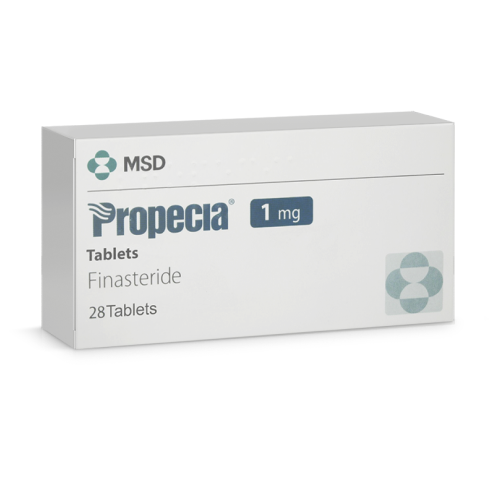
- Packaging: Genuine Propecia comes in sealed blister packs inside a branded box. The box should show the manufacturer (Merck Sharp & Dohme) and a unique batch number.
- Tablet: Small, film-coated, tan-coloured, marked with “PROPECIA” and “MSD 71.”
- Verification: Some packs have a QR code or hologram for online verification (MHRA-registered pharmacies supply only genuine product).
- Price: Suspiciously low prices or offers from non-UK websites are red flags for counterfeit or substandard medication.
- Generics: UK generics display the active ingredient “finasteride” and the manufacturer (e.g., Teva, Accord) on the pack. Generics are regulated but may differ in shape or colour.
- Report: If you suspect a fake, do not use it—report to the MHRA Yellow Card scheme.
Generics vs Original: Both are required to meet the same UK/EMA standards of efficacy and safety, but excipients (fillers, dyes) may vary. Rarely, patients may have hypersensitivity to a generic’s excipients. If you have known allergies, ask your pharmacist for the ingredient list.
Compatibility Check: Propecia and Other Products
| Product/Drug | Can it be combined? | Potential Consequences |
|---|---|---|
| Paracetamol/Ibuprofen | Yes | No significant interaction |
| Topical minoxidil | Yes | No interaction; often prescribed together |
| Dutasteride | Not recommended | Similar mechanism; may increase side effect risk |
| Warfarin | With caution | Monitor; rare reports of altered anticoagulant effect |
| Alcohol | Moderation | Excess can stress liver |
| SSRIs (antidepressants) | Yes, but monitor | Both can affect sexual function |
| Supplements (biotin, zinc) | Generally yes | No significant interaction |
Special Considerations: Who Should Be Extra Cautious with Propecia?
- Chronic liver disease: Dose adjustment may be needed; monitoring is essential. Let your GP know about any liver conditions.
- Depression, anxiety, or previous mental health issues: There have been rare reports of mood disorders exacerbated by Propecia. Discuss risks and monitor for any changes.
- Fertility concerns: Propecia may decrease sperm count and quality in a subset of men, though this is usually reversible. If actively trying for children, discuss with your doctor before starting or continuing.
- Drivers and machine operators: Propecia does not impair driving ability or concentration.
- Older adults (>65): Similar efficacy, but monitor for side effects and consider overall health status.
- Women: Not indicated or recommended. Strictly avoided in pregnancy and breastfeeding.
Myth vs Reality: Propecia Expectations
- Myth:
- Propecia will regrow a full head of hair for everyone.
- Reality:
- Most men experience slowed hair loss, some regrowth, and stabilisation. Dramatic regrowth is possible but not typical.
- Myth:
- You’ll see results in just two weeks.
- Reality:
- It takes 3–6 months of daily use to notice improvement; results plateau after a year.
- Myth:
- Side effects are inevitable and long-lasting.
- Reality:
- Most men have no or mild side effects, which are usually reversible upon stopping.
What To Do in Case of Propecia Overdose?
- Stop taking Propecia immediately.
- Call NHS 111 or emergency services (999) if you feel unwell.
- Inform the medical professional of the exact amount and time taken.
- Keep the packaging for identification.
- Do not attempt to induce vomiting unless instructed by a healthcare provider.
- There is no specific antidote, but supportive care is effective for most accidental overdoses.
Key point: Adverse events from single accidental overdoses are rare but always best checked by professionals.
Professional Opinion of doctor
In my clinical experience, Propecia is most effective for men in the early to moderate stages of male pattern hair loss who are motivated for long-term, consistent treatment. The advantage is its well-established, evidence-based efficacy in halting progression and, in some, achieving modest regrowth. However, it’s not a miracle solution, and some patients may experience unacceptable side effects, particularly sexual or mood changes, which can outweigh the benefits. Alternatives, such as topical minoxidil or low-level laser therapy, may be preferable for those unwilling to accept potential sexual risks. Propecia should be considered after thorough discussion about expectations and side effect profile—and always chosen as part of a broader hair restoration strategy that may include lifestyle changes, psychological support, or even surgery in suitable candidates. Ultimately, shared decision-making and regular follow-up are the cornerstones of successful hair loss management.
Psychological Support and Empathy
Hair loss is extremely common and can affect self-esteem, mood, and social interactions. Remember, you’re not alone—and effective management options exist. If you find hair loss distressing, consider seeking support from a counsellor, therapist, or a patient support group. Open conversation with a partner or family member may also help reduce anxiety around treatment and results.
FAQ: People Also Ask
- Can Propecia be used daily?
- Yes, Propecia is designed to be taken once daily for ongoing effect.
- Is Propecia available without prescription in the UK?
- No. It is classified as prescription-only medicine by the MHRA.
- How long does Propecia take to work?
- Most men see results within 3–6 months of continuous use, with full benefit at 12 months.
- What are the main risks of Propecia?
- Sexual dysfunction, including reduced libido and erectile issues, is the most commonly reported adverse effect.
- Is Propecia covered by the NHS?
- Not for hair loss—treatment is on a private prescription only.
- Can women use Propecia?
- No. It is not indicated for women and can be dangerous in pregnancy.
- Are Propecia and generic finasteride equally effective?
- Yes, both contain the same active ingredient and are equally effective when sourced from licensed UK pharmacies.
- What should I do if I stop seeing results?
- Discuss with your doctor—sometimes combination therapies or alternative approaches may be recommended.
- Is it safe to buy Propecia online?
- Only from UK-registered pharmacies with MHRA approval and a valid prescription. Avoid overseas or unregulated sources.
- Can Propecia cure baldness completely?
- No. It manages symptoms while you take it and slows progression but does not cure hair loss permanently.
References
- Medicines and Healthcare products Regulatory Agency (MHRA) product information and safety updates. MHRA official site
- National Health Service (NHS) Finasteride patient information. NHS
- Electronic Medicines Compendium, Propecia SPC (2026 update). emc
- Rossi A, et al. “Finasteride in the treatment of men with androgenetic alopecia.” PubMed (2024 update). PubMed
- ClinicalTrials.gov, Finasteride hair loss studies. ClinicalTrials.gov
- British Association of Dermatologists. “Guidelines for the management of male pattern hair loss.” BAD
- UK Yellow Card Scheme for reporting adverse effects. Yellow Card
How to Find a Real Qualified Hair Loss Specialist in the United Kingdom
For specialist assessment of hair loss, seek out a consultant dermatologist registered with the General Medical Council (GMC)—preferably with a special interest in hair disorders (trichology). Top clinics are based in London (Harley Street, The London Skin and Hair Clinic, Guy’s and St Thomas’ Hospital Dermatology), Manchester (The Dermatology Clinic, Manchester University NHS Foundation Trust), and Edinburgh (Western General Hospital Dermatology). You can check the credentials of any doctor using the GMC register or seek referral through your GP for NHS or private consultation. Always confirm the clinic is registered with the Care Quality Commission (CQC) for safe and regulated care.
Conclusion: Making Safe and Informed Choices about Propecia in the UK
Propecia (finasteride) is a clinically proven oral therapy for male pattern hair loss, available only with a prescription in the United Kingdom. It works best for men seeking to slow or halt hair loss, and for some, boost regrowth. The key to success is patience, adherence, realistic expectations, and regular medical oversight. Always obtain medication from regulated sources and consult a hair specialist or dermatologist for tailored advice. If you experience side effects, report them promptly, and never hesitate to seek support for the emotional impact of hair loss—help and effective management options are available.